Rocky Balboa (2006)
Rocky Balboa revisits the iconic boxer decades after his championship years, presenting a reflective and emotionally grounded story about aging, loss, and personal redemption. Rocky lives a quiet life in Philadelphia, running a small Italian restaurant named after his late wife, Adrian. Still grieving her death, he spends much of his time visiting her grave, speaking to her as if she were still present, unable to fully move forward.
Rocky’s relationship with his son, Robert, is strained. Robert struggles with living in his father’s shadow and feels neglected by Rocky’s emotional absence during his childhood. Though Rocky tries to be supportive, his inability to express himself deepens the divide between them.

The story takes an unexpected turn when a sports network simulation shows that a prime Rocky could defeat current heavyweight champion Mason “The Line” Dixon. Though Dixon is undefeated, fans criticize him for lacking strong opponents and question his legitimacy as champion. To restore public interest and silence critics, Dixon agrees to an exhibition match against the aging legend.
Motivated by unresolved regrets rather than money or fame, Rocky decides to return to the ring. Despite concerns over his age and health, he begins training under longtime friend Paulie and former rival Apollo Creed’s trainer, Duke. Rocky’s training focuses on endurance, heart, and survival rather than speed or power.
Rocky’s decision angers Robert, who fears his father will be seriously injured or humiliated. In a powerful confrontation, Rocky explains that everyone has “stuff in the basement” they must face. He insists that this fight is about proving to himself that he can still go forward when life knocks him down. This speech helps Robert understand Rocky’s motivation and begin to reconcile.
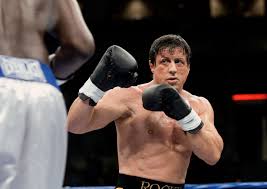
The exhibition fight becomes the emotional climax. Mason Dixon dominates early rounds with youth and athleticism, but Rocky absorbs the punishment and continues forward, refusing to quit. Rocky knocks Dixon down, stunning the crowd and forcing the champion to confront his own doubts. The fight goes the full ten rounds, and Rocky loses by split decision.
Though he does not win the match, Rocky achieves a deeper victory. He earns Dixon’s respect, reconnects with his son, and finds emotional closure with Adrian’s memory. The film ends with Rocky walking away from the ring fulfilled, having proven that age does not define spirit.
Rocky Balboa is a poignant meditation on perseverance and self-worth. It affirms that true victory lies not in winning titles, but in having the courage to step back into the fight—no matter how old or afraid you may be.